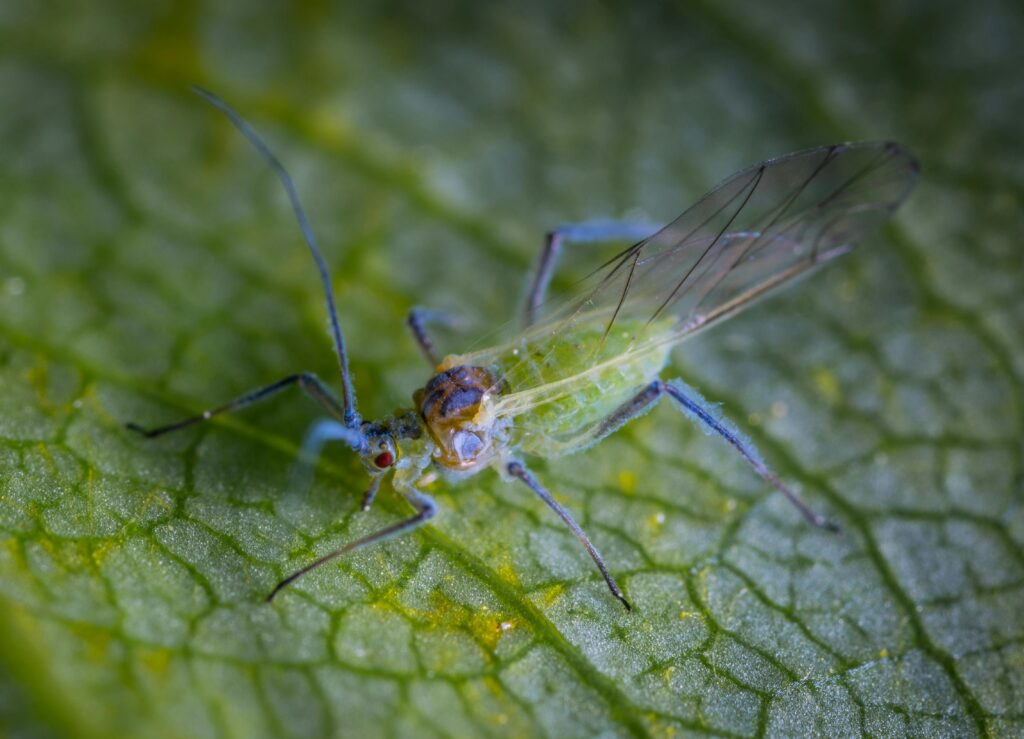
Aphids are one of the most persistent pests in agriculture. Although they are only 1–3 mm in size, their impact is enormous, as they can very quickly compromise both crop yield and plant health.
They are the perfect example of how a seemingly insignificant organism can become a limiting factor, particularly in intensive farming systems and greenhouses.
What are they, and why are they multiplying so quickly?
Aphids belong to the superfamily Aphidoidea, within the order Hemiptera. They possess a highly specialised piercing-sucking mouthpart that enables them to feed directly on the phloem, extracting sugar-rich sap and disrupting the plant’s physiological balance. Depending on the species and host, they may be green, black, yellow, brown or grey in colour, and are mainly found on tender shoots and on the undersides of leaves.
Translated with DeepL.com (free version)
The annual life cycle of aphids combines an oviparous sexual phase with multiple viviparous asexual generations. Under favourable conditions, viviparous parthenogenesis enables successive generations to follow one another. Generational overlap, combined with telescopic development, promotes exponential growth, meaning that a single female can give rise to massive colonies within a few weeks.
The most damaging aphid species in agriculture
Although there are thousands of species, only a few account for the greatest economic impact. The main global reference is Myzus persicae, the
In addition to Myzus persicae, there are other aphids that also cause significant problems, notably Aphis gossypii, which is very common in warm climates and in protected crops; Aulacorthum solani, frequently found on peppers and other vegetables; and Macrosiphum euphorbiae, which usually appears on crops such as tomatoes and potatoes. In fruit trees, Eriosoma lanigerum, the woolly apple aphid, deserves a special mention, as it not only affects leaves and branches but can also damage the roots, seriously weakening the tree.
From plant stress to crop loss
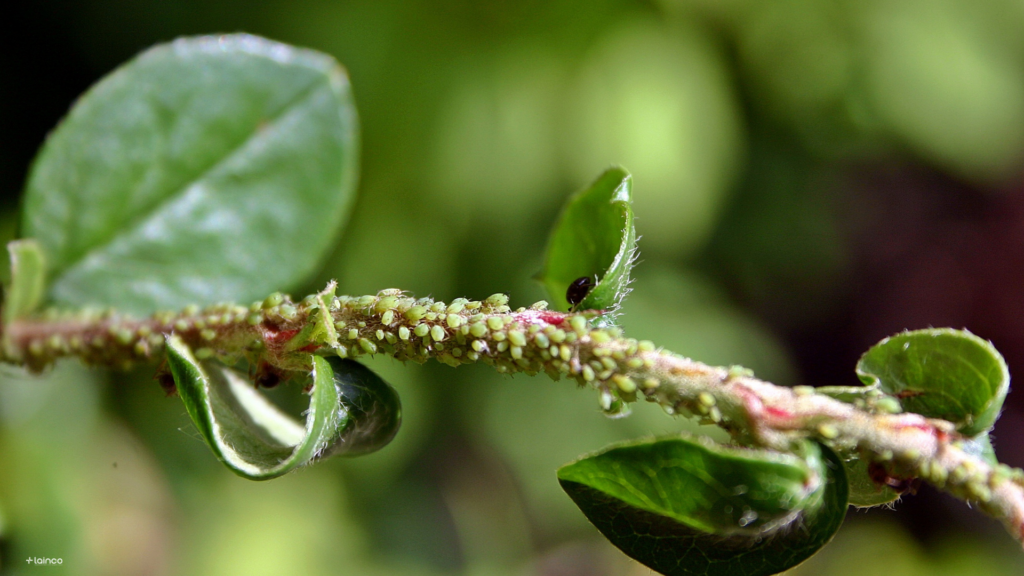
The damage caused by aphids is progressive and cumulative. Directly, the continuous sucking of sap leads to general weakening of the plant, stunted growth, chlorosis, deformities and leaf curling. Indirectly, the excretion of honeydew promotes the development of sooty mould, which reduces photosynthetic capacity and impairs the commercial quality of leaves and fruit.
However, the most significant agronomic impact is their role as vectors of plant pathogenic viruses, as a single bite can be enough to transmit them. The transmission of over 100 viruses has been documented, including PVY, PLRV and CMV, making aphids a critical threat even at low densities.
Control strategies for aphids
Aphid management should be based on an integrated approach, in which preventing their early establishment in the crop is key. Removing weeds that act as a reservoir, controlling ants, applying balanced fertilisation and monitoring using yellow sticky traps can help reduce the initial risk and detect early infestations in good time.
Chemical control remains a necessary tool in high-pressure situations, but it must be applied with technical judgement and by rotating modes of action to minimise the development of resistance, particularly in species where this problem is well documented, such as Myzus persicae. Active ingredients such as flonicamid, deltamethrin or spirotetramat should be viewed as part of an overall strategy, rather than as stand-alone solutions.
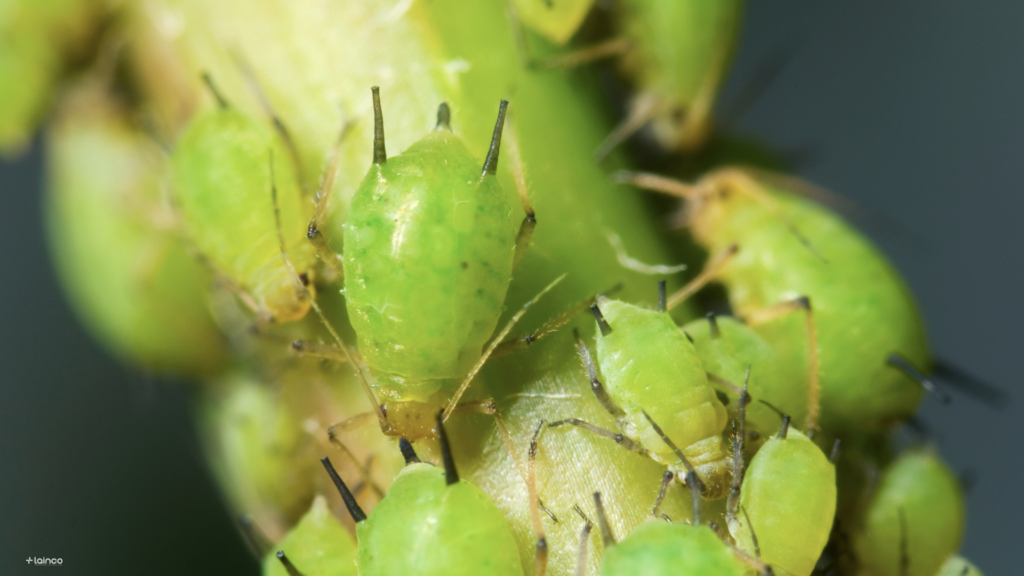
Biological control now plays a central role, particularly in intensive horticulture. The use of parasitoids as Aphidius spp. y distintos depredadores naturales, junto con soluciones de bajo impacto como jabones potásicos o aceites minerales, permite mantener las poblaciones por debajo del umbral de daño y avanzar hacia sistemas productivos más estables, resilientes y sostenibles. y distintos depredadores naturales, junto con soluciones de bajo impacto como jabones potásicos o
The agriculture of the future
Aphids will remain one of the most challenging pests in modern agriculture. Climate change will lead to more generations each year and increasing pressure on crops. At the same time, the gradual reduction in the use of active ingredients will make it necessary to optimise every intervention and make more precise decisions, supported by natural strategies and solutions.
In this context, the success of pest management will not depend on eradicating the pest. The key will lie in anticipating its behaviour, understanding its biology and taking action at the right time, using the most effective tools. Only in this way will it be possible to move towards sustainable management that is in line with the agriculture of the future.

