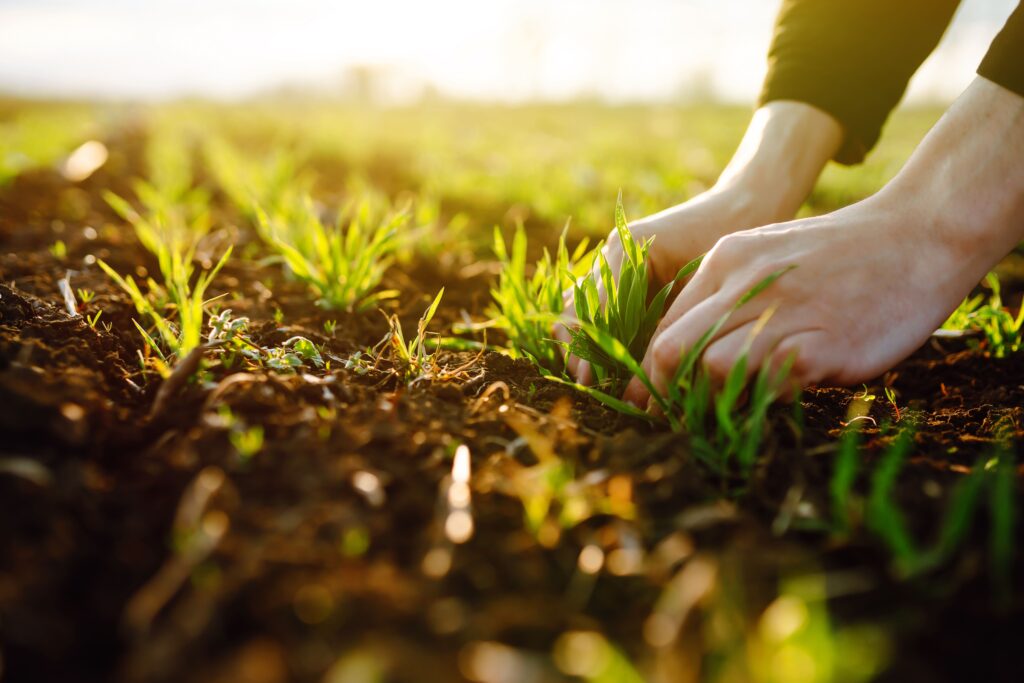
Modern agriculture begins right under our feet. In the soil, seeds germinate, organic matter decomposes and processes essential to food production take place. According to the FAO, around 95% of the food we consume depends directly on the soil, which is why its conservation is crucial to ensuring long-term food security and agricultural productivity.
Agricultural soils, a living ecosystem
Soils function as an ecosystem in which organic matter, microorganisms, soil fauna, water, air and minerals interact. These components provide nutrients, oxygen and structural support to plants, as well as protecting their roots. A balanced soil sustains production in a stable and resilient manner in the face of adverse conditions, contributing to crop fertility and healthy development.
It can take up to a thousand years to form just one centimetre of fertile soil, whereas its degradation occurs much more rapidly. For this reason, conserving and managing soils correctly is a priority for maintaining agricultural production and ensuring its sustainability.
The challenge of feeding the world
Global population growth in the 20th and 21st centuries has led to intensified soil management with the aim of ensuring sufficient food supplies. This has increased pressure on natural resources and highlighted the need to balance productivity and conservation. According to the Food and Agriculture Organisation of the United Nations, the major challenges are:
- Feeding a growing population
- Maintaining soil fertility
- Producing food without compromising natural resources
Global agricultural production will need to increase by around 60% by 2050, so ensuring healthy soils will be crucial to achieving this without degrading ecosystems.
Consequences of intensification
The intensive use of land through advanced technology, irrigation and agrochemicals has led to increased production, but has also caused soil degradation, erosion and a loss of fertility. When soils deteriorate, their ability to retain nutrients and water decreases, affecting crop health and increasing dependence on external inputs.
To preserve productivity, sustainable agriculture employs practices such as crop rotation, cover crops and the addition of organic matter. These strategies improve soil structure, increase microbial biodiversity and maintain long-term fertility.
Biological regeneration
When soils are affected by pathogens or a loss of biological activity, disinfection strategies are applied, followed by biological regeneration. Disinfection removes accumulated harmful organisms, whilst regeneration introduces beneficial microorganisms that restore biodiversity, activate nutrient cycles and strengthen crop resilience.
This approach allows soils to recover their functionality, increasing productivity and reducing reliance on plant protection products, without compromising sustainability.
Beneficial soil microorganisms
PGPR bacteria, such as Pseudomonas spp. and Bacillus spp., are essential for agricultural soils. They inhabit the rhizosphere and promote plant growth, protect the root system against pathogens, and increase the availability of nutrients by breaking down organic matter.
One example is Pseudomonas putida strain PSP.L2.07, a bioactivator capable of solubilising inorganic phosphorus, producing siderophores that facilitate iron uptake, and mobilising calcium to prevent deficiencies. Furthermore, it protects roots through biofilms generated by exopolysaccharides.
Fungi of the genus Trichoderma are also key. Their rapid growth and tolerance to different conditions allow them to thrive in a wide range of soils. They act as biocontrol agents and parasitise pathogenic fungi, compete for nutrients and space, produce antimicrobial compounds and stimulate the plant’s defences, thereby reducing disease and improving crop health.
Disinfection and Regeneration
The strategy for soil disinfection and biological regeneration combines a clean soil with the introduction of beneficial microorganisms that restore biodiversity and activate nutrient cycles. This transforms simply sanitised soils into living soils, capable of sustaining long-term productivity and reducing dependence on external inputs.
Maintaining healthy soils is the foundation of productive and sustainable agriculture. Plant nutrition, resilience to disease and the ability to produce food without degrading the environment all depend on their biological balance. The future of agriculture depends on striking a balance between productivity and sustainability, ensuring food for future generations without compromising natural resources.

